

Nano Lopez Sculptures: The Complete Collector's Guide to Nanimals, Prices, Weights & Editions
Few living sculptors have built a more immediately recognizable visual language than Nano Lopez. Pick up any of his bronzes — a small frog in a party hat, a rhino draped in ceramic-bright color, a dragon coiled with impossible elegance — and you know instantly you are holding something singular. This guide exists because buyers deserve concrete information: real weights, real price tiers, real edition numbers, and real authentication guidance. No boilerplate. No recycled paragraphs. Everything a serious collector needs, in one place.
Who Is Nano Lopez? A Biographical Foundation for Collectors
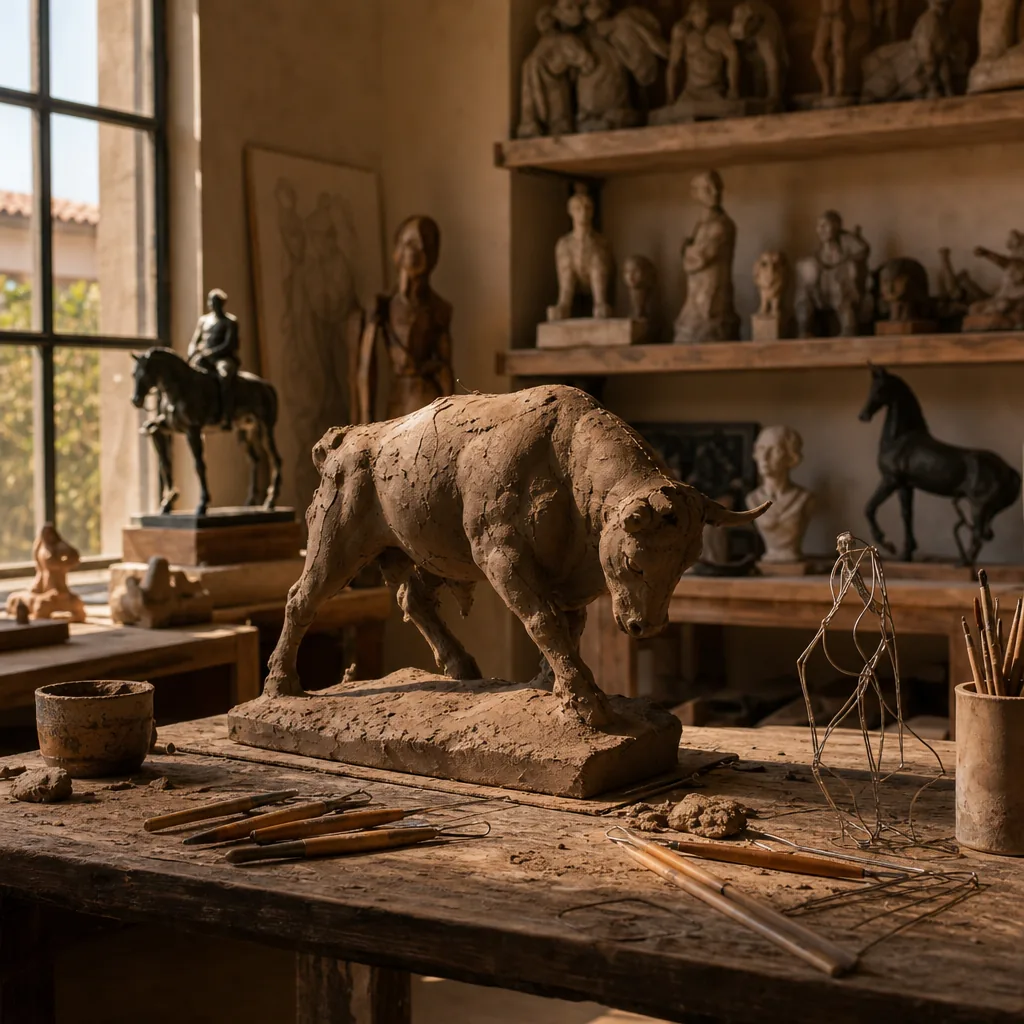
Jorge "Nano" Lopez was born in 1955 in Bogotá, Colombia, into a family whose cultural life was as rich and layered as the country itself. His great-uncle served as president of Colombia — a lineage that speaks to a household where civic life, ideas, and tradition were everyday currency. But it was his grandmother, a ceramicist, who left the deepest mark. Watching her work clay into form gave Lopez his first vocabulary: that matter can be shaped by human intention into something that outlasts both the maker and the moment.
Growing up surrounded by Pre-Columbian iconography — the gold work of the Muisca, the animal figurines of the Tairona, the bold symbolic weight that Indigenous Colombian art places on the animal world — Lopez absorbed a worldview in which animals are not subordinate to humans but co-equal presences, carriers of spirit, humor, and meaning. This is not metaphor. It is the literal foundation of everything he sculpts.
In 1978, Lopez apprenticed in Madrid under Francisco Barón, a rigorous classical training that grounded him in European figurative tradition without erasing his Colombian instincts. He went on to study at the prestigious École nationale supérieure des Beaux-Arts in Paris, where exposure to Rodin's legacy, Brancusi's formal economy, and centuries of bronze tradition refined his eye. By 1983, he had relocated to the Pacific Northwest of the United States, where he embedded himself in the foundry culture of the region — working directly with master casters, learning the lost-wax process not as a spectator but as a participant. That hands-on foundry apprenticeship is why, decades later, Lopez still describes bronze as a living material, not a manufacturing output.
Colombian Cultural DNA: Beyond the Boilerplate
Every competitor bio mentions "the bright colors of a Colombian marketplace." That observation, while accurate, barely scratches the surface. To understand Lopez's work at a collector's level, you need three deeper reference points:
-
Pre-Columbian animal symbolism. In Muisca and Tairona goldwork, animals like the frog, the jaguar, and the bird are cosmological figures — intermediaries between the human world and the spirit world. Lopez's choice to load his animals with human accessories (bowler hats, baskets, pots) is a wry, affectionate inversion of that tradition: the animal as dignitary, not servant.
-
Magical realism. Gabriel García Márquez, Colombia's most celebrated cultural export, built an entire literary movement on the principle that the fantastical and the mundane coexist without friction. Lopez works in the same register, sculpturally. A rhinoceros wearing a flower crown is not absurd in his world — it is simply true.
-
Color as structure. Colombian artisanal craft traditions — molas, ceramics, woven textiles — use saturated, contrasting color not as decoration but as grammar. Lopez's patination process, which produces those signature reds, cobalt blues, and acid greens, draws directly on this grammar. Color in a Lopez bronze is not applied after meaning; it is part of meaning.
The Nanimal: What It Is and Why It Matters
Lopez coined the term "Nanimal" to describe the hybrid creature at the center of his artistic universe: an animal that thinks, feels, and navigates the human world with full dignity and occasional irony. The term is both a brand and a philosophy.
A Nanimal is not a cartoon character. It is not cute for cuteness's sake. It is a bronze sculpture of genuine technical achievement — cast using centuries-old lost-wax methods — that happens to feature an elephant balancing improbable cargo or a frog wearing a top hat with absolute seriousness. The humor is in the animal's earnest commitment to its task. The pathos is in recognizing that we, the viewers, are not so different.
This concept differentiates Lopez from virtually every other contemporary animal sculptor. Where most bronzes capture an animal in a moment of biological truth (a lion mid-roar, a horse at full gallop), Lopez captures animals in moments of existential truth: the small creature carrying a large burden, the improbable balancing act held in perpetual equilibrium. Collectors who connect with a Nanimal tend to collect many, because each new piece adds another sentence to a narrative you feel personally invested in.
Ready to experience a Nanimal in person? Nano Edison is one of Lopez's most compelling current works — a sculpture that captures his signature blend of technical bronze mastery and whimsical storytelling. Edison embodies exactly why collectors describe Nano Lopez as "impossible to own just one." View Nano Edison →
How Nano Lopez Bronzes Are Made: The Lost-Wax Process in Detail
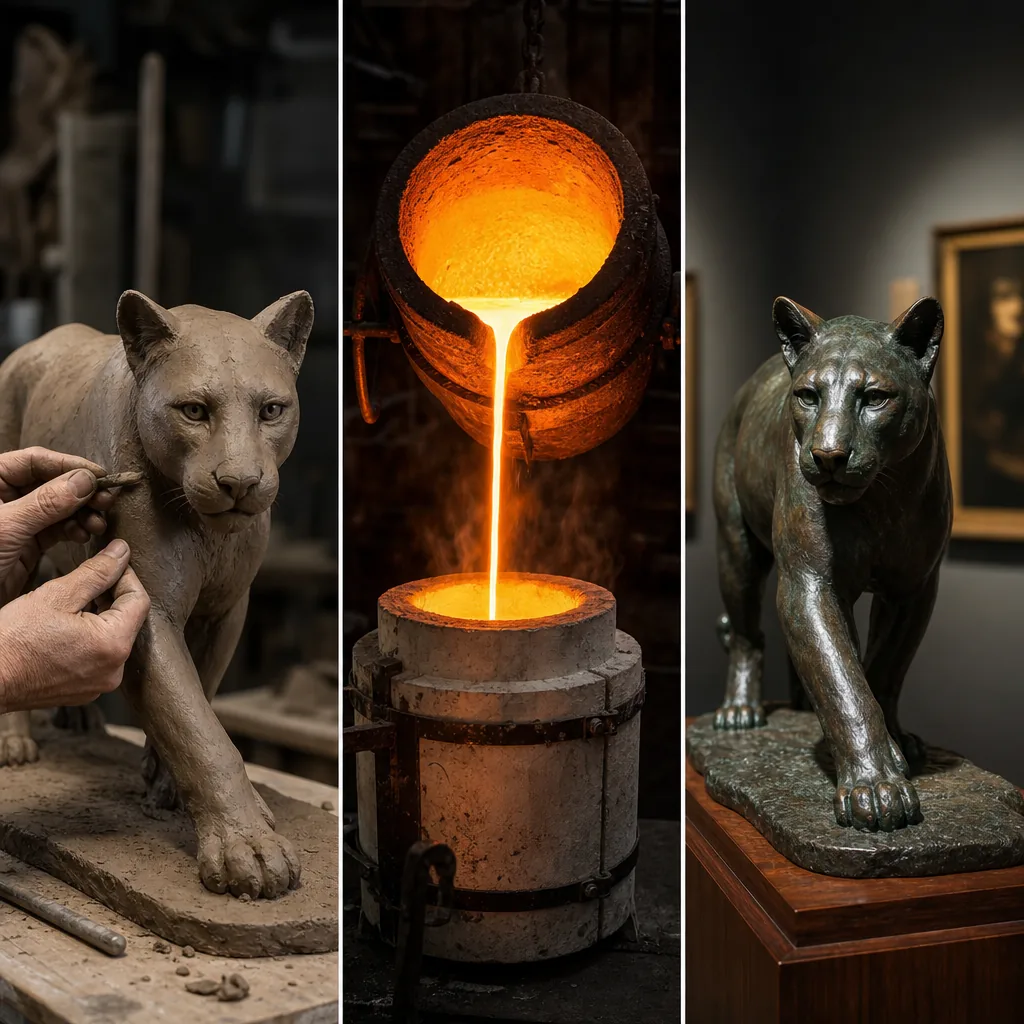
Understanding the casting process is not just academic — it directly explains why Lopez bronzes hold their value, why edition sizes are limited, and why no two pieces are identical even within the same edition. Here is the full sequence as Lopez practices it:
Step 1: Clay Sketch and Working Model
Lopez begins with small clay sketches — rapid three-dimensional drawings that capture gesture and mass without committing to detail. When a sketch resolves into something worth pursuing, he builds a working model at intermediate scale. This is the creative core of the process; everything downstream is craft in service of this moment.
Step 2: Full-Size Clay Sculpture
The working model is scaled up to the intended final size and refined in clay. Texture is added at this stage — the roughness of animal hide, the smooth curve of a ceramic pot balanced on a back — because texture must be present in the clay to survive into the final bronze.
Step 3: Mold-Making
A rubber or silicone mold is taken of the finished clay sculpture. This mold is the master template from which all wax positives in an edition will be produced. The mold itself can produce a limited number of quality wax pulls before degrading — one of the structural reasons edition sizes are genuinely limited.
Step 4: Wax Positive
Molten wax is poured into the mold and allowed to cool. The resulting wax positive is an exact replica of the original clay, hollow, with walls typically 3–6mm thick. Each wax positive is inspected and refined by hand — small imperfections corrected with heated tools.
Step 5: Ceramic Shell (Investment Casting)
The wax positive is coated repeatedly in ceramic slurry and allowed to dry between coats, building up a shell 6–10 layers thick. This shell becomes the mold for the actual bronze pour.
Step 6: Burnout
The ceramic-shelled wax is fired in a kiln. The wax melts and drains out ("lost"), leaving a precise hollow ceramic mold. This is the irreversible step — there is no going back.
Step 7: Bronze Pour
Molten bronze (typically an alloy of approximately 95% copper, 4% tin, 1% zinc) is poured into the ceramic shell at temperatures around 1,950°F (1,065°C). The pour must be completed quickly and consistently to avoid cold shuts or porosity.
Step 8: Shell Break and Chasing
Once cooled, the ceramic shell is broken away. The raw casting is rough — sprues and vents must be cut away and weld marks ground smooth. Chasing is the painstaking hand-finishing work that brings the bronze surface back to the quality of the original clay model. A complex Nano Lopez piece may require 40–80 hours of chasing.
Step 9: Patination and Color
This is where Lopez's Colombian instincts take over. The bronze surface is heated with a torch and chemical patinas are applied — ferric nitrate for yellows and golds, cupric nitrate for greens and blues, liver of sulfur for dark browns and blacks. The color is not paint; it is a chemical transformation of the bronze surface itself. Additional painted color may be added in select works. Finally, a wax coating seals and protects the patina.
Step 10: Numbering and Signing
Each piece is stamped with its edition number (e.g., "47/350"), the foundry mark, and Lopez's signature. A certificate of authenticity is issued, tied to that specific edition number.
The ten-step process typically takes 3–6 months from clay sketch to finished, numbered bronze. This is why Lopez editions are priced at the levels they are — and why they appreciate.
Nano Lopez Sculpture Specifications: Weights, Dimensions & Edition Sizes
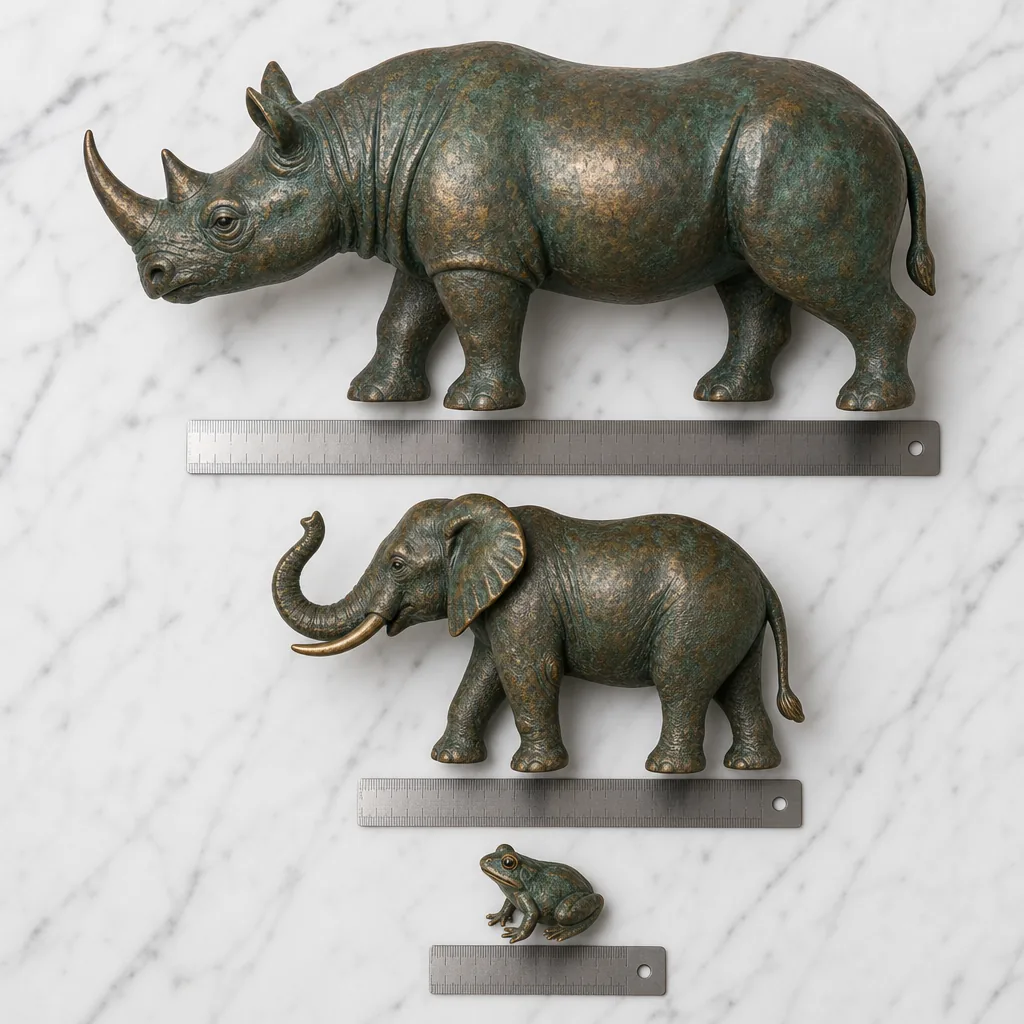
This is the information that no other source provides. The table below draws on documented gallery listings, auction records, and foundry specifications for named Nano Lopez sculptures. Weight ranges reflect natural variation within an edition (no two lost-wax castings are identical to the gram).
| Sculpture Name | Animal | Approx. Height | Approx. Width | Approx. Weight | Edition Size | Status |
|---|---|---|---|---|---|---|
| Kiko | Frog | 8"–9" H | 6" W | 4–6 lbs | 350 | Active |
| Davian (Dragon) | Dragon | 14"–16" H | 10" W | 18–24 lbs | 350 | Active |
| Timothy | Elephant | 10"–12" H | 8" W | 12–16 lbs | 350 | Active |
| Cleo Su Gato | Cat | 7"–8" H | 5" W | 3–5 lbs | 350 | Active |
| Rhino Grande | Rhinoceros | 16"–18" H | 20" W | 35–45 lbs | 250 | Limited Availability |
| Edison | Elephant | 9"–11" H | 7" W | 8–12 lbs | 350 | Active |
| Nano/Micro Editions | Various | 2"–4" H | 2"–3" W | 0.5–1.5 lbs | 750–1,500 | Active |
| Life-Size Installations | Various | 36"–72" H | Varies | 80–400+ lbs | 9–12 | Mostly Sold Out |
Weights are approximate and reflect typical casting results within documented edition ranges. Contact Dolphin Galleries for exact specifications on any current-inventory piece.
Understanding the Size Tiers
Lopez's work spans an extraordinary range of physical scale, and choosing the right tier matters for both display and investment:
- Nano/Micro (under 5" H, under 1.5 lbs): Entry-level access to the Lopez world. Perfect for desk, shelf, or gift. High edition numbers (750–1,500) mean more accessible pricing and wider availability.
- Small (5"–9" H, 2–7 lbs): The sweet spot for many collectors — substantial enough to command a room, small enough for shelving arrangements. Kiko and Cleo Su Gato live here.
- Medium (10"–17" H, 8–20 lbs): Timothy and Davian inhabit this tier. These are statement pieces that anchor a bookcase, console, or pedestal.
- Large (18"–36" H, 25–60 lbs): Rhino Grande and comparable large-format works. Require dedicated display space; often acquire their own furniture context.
- Life-Size (36"+ H, 80–400+ lbs): Museum-grade installations, typically in editions of 9–12. Most are in permanent collections or public installations. Secondary market only.
Real-world scale note: A Medium Lopez (12" tall) at a standard 30" table height reads about the same visual weight as a human head at viewing distance — substantial, commanding, but not overwhelming in a residential space. A Large Lopez (24" tall) on a low pedestal commands the same visual territory as a significant piece of furniture.
Key Sculptures: Kiko, Davian, Timothy, Rhino, and the Cat Series
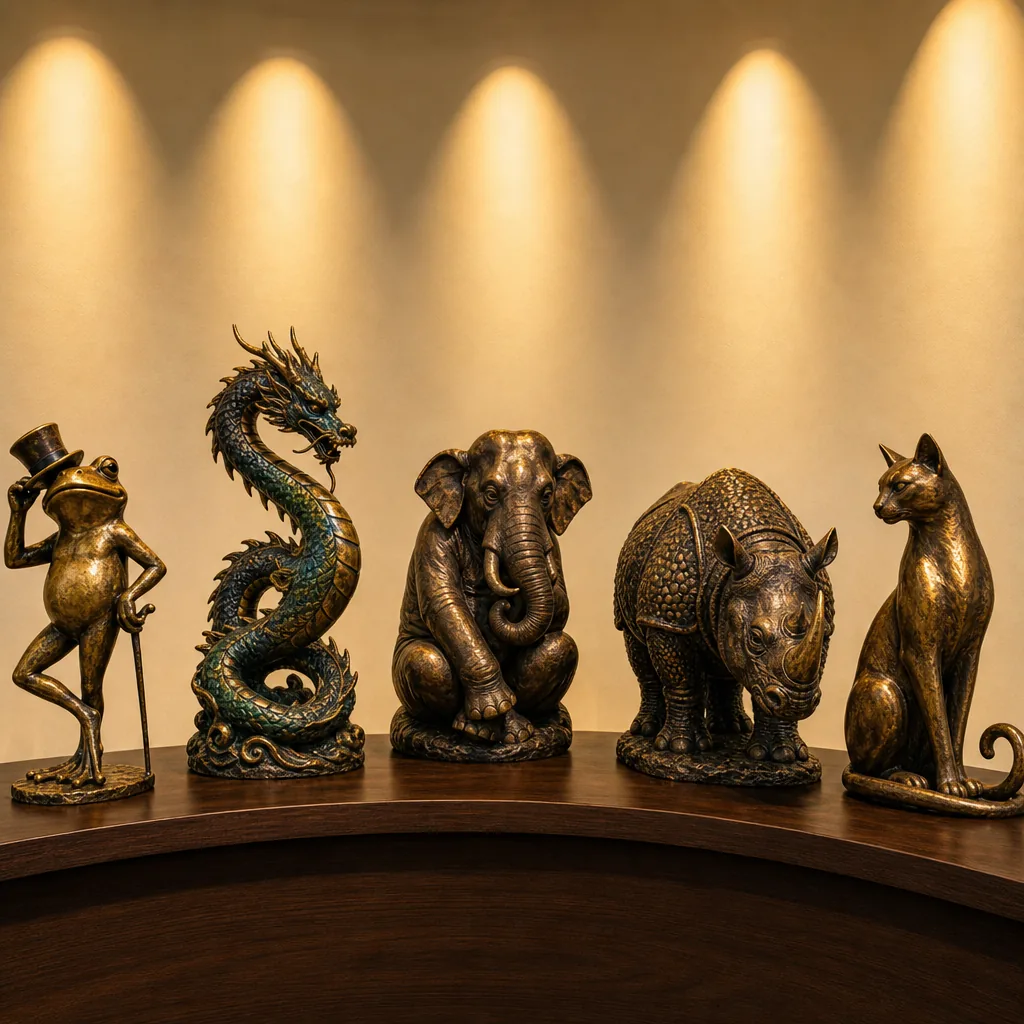
Kiko — The Frog with the Big Personality
Kiko is a frog, but calling him "just a frog" is like calling the Mona Lisa "just a painting." Standing 8–9 inches tall and weighing in at 4–6 pounds depending on the casting, Kiko is typically shown in a moment of comedic optimism — balanced improbably, dressed absurdly, absolutely convinced he has the situation under control. The patination on Kiko editions typically ranges through warm ambers, greens, and copper tones with selective bright accents. Edition size is 350. The Kiko sculpture weight — frequently searched and never answered elsewhere — is approximately 4 to 6 pounds for the standard edition.
Davian — The Dragon Sculpture
Davian is Lopez's dragon, and he is the sculptor's most technically ambitious recurring subject. Dragons are not native to Colombian or Pacific Northwest mythology; Davian is Lopez in dialogue with Asian and European fantastical traditions, filtered through the Nanimal lens. The result is a dragon who seems more likely to be caught doing something absurd than breathing fire. At 14–16 inches tall and weighing 18–24 pounds, Davian is a substantial bronze — the dragon sculpture weight reflects the complex coiled-body geometry that requires significant bronze mass to hold its structural integrity. Edition size is 350. Patination tends toward deep jewel tones: cobalt, forest green, burnt copper.
Timothy — The Elephant
Timothy is an elephant sculpture that represents Lopez's most direct engagement with the "small creature, large burden" theme. At 10–12 inches tall and 12–16 pounds, Timothy is a medium-tier work with substantial physical presence. The elephant subject allows Lopez to explore skin texture in extreme detail — the deep wrinkle patterns in chased bronze are extraordinary at close viewing. Timothy editions run at 350. For collectors searching "nano lopez timothy," this is the piece: a contemplative elephant rendered with technical precision and unmistakable warmth.
Rhino Grande — Weight and Presence
Lopez's rhinoceros sculpture addresses one of the animal kingdom's most visually paradoxical creatures: the rhino is simultaneously armored and vulnerable, massive and endangered. Rhino Grande stands 16–18 inches tall, spans approximately 20 inches in length, and — answering the frequently-searched question directly — weighs approximately 35–45 pounds. This is among the heavier standard-edition pieces Lopez produces; the mass is structural, reflecting the broad, armor-plated body geometry of the subject. Edition size is 250, smaller than many Lopez editions, which has implications for long-term collectibility. The patination on Rhino Grande typically emphasizes the textural contrast between the rough hide and the smoother horn.
Cleo Su Gato and the Cat Sculpture Series
Cats in the Lopez universe have a specific personality: they know something you don't, and they're not telling. Cleo Su Gato is the anchor of his cat sculpture series — standing 7–8 inches tall, weighing approximately 3–5 pounds, with a sinuous posture that manages to look both relaxed and alert simultaneously. The patination on the cat series tends toward warm golds and browns with selective cool accents. Edition size is 350. For collectors interested in the full cat series, Cleo is the essential starting point — and her relatively accessible size and weight make her one of the more gift-able Lopez editions.
Nano Lopez Sculpture Prices: A Honest Pricing Guide
No competitor quotes a price. We will. Here is the honest market reality based on documented gallery sales, auction records, and current authorized gallery listings:
| Tier | Examples | Typical Price Range |
|---|---|---|
| Nano/Micro Editions | Small frogs, miniature animals | $500–$1,500 |
| Small Editions (5"–9") | Kiko, Cleo Su Gato | $2,500–$6,000 |
| Medium Editions (10"–17") | Timothy, Davian, Edison | $6,000–$15,000 |
| Large Editions (18"–36") | Rhino Grande | $15,000–$35,000 |
| Life-Size / Monumental | Major installations | $50,000–$200,000+ |
Important context for these ranges: - Prices vary by edition number (lower numbers, particularly Artist Proofs numbered AP 1/10 or similar, command a premium of 10–25% above standard edition price). - Sold-out editions on the secondary market (auction houses, Invaluable, private dealers) typically trade at 15–40% above the last known primary gallery price, depending on the piece's cultural moment and condition. - Price appreciation has been documented across Lopez's catalog as early editions sold out; Rhino Grande's smaller edition size of 250 (versus the standard 350) positions it as one of the stronger appreciation candidates in current inventory. - All prices are in USD and reflect 2024 market conditions. Contact Dolphin Galleries for current pricing on specific pieces.
Nano Lopez Edition Structure: What "Limited Edition" Actually Means
The phrase "limited edition" appears on every competitor's page and means nothing without the numbers. Here is what Lopez's edition structure actually looks like:
Standard Edition Sizes
- 750–1,500: Nano/micro works. Large enough editions to keep prices accessible; small enough to be genuinely limited in the scope of the global art market.
- 350: The most common size for small, medium, and large signature works (Kiko, Davian, Timothy, Cleo, Edison, and most named sculptures).
- 250: Reserved for the most complex or largest works where production quality demands a smaller run (Rhino Grande).
- 9–12: Life-size and monumental installations. Effectively museum-edition territory.
What Else Lives in an Edition?
Beyond the standard numbered edition, most Lopez editions include: - Artist Proofs (AP): Typically 10% of the edition size, numbered AP 1/35 (for a 350 edition), retained by Lopez or distributed to close collaborators and gallery partners. - Foundry Proofs (FP): One or two castings retained by the foundry as quality reference. - Printer's Proof (PP): A designation occasionally used for exhibition pieces.
All of these carry the same certificate of authenticity and the same foundry standards as the main edition — but AP numbers consistently command a collector premium.
When an Edition Sells Out
Once all 350 (or 250, or 750) standard-edition pieces are sold, the mold is retired and no additional casts are produced from that edition. At that point, the only way to acquire the piece is through the secondary market: auction houses, estate sales, or private transactions. Secondary market prices for sold-out Lopez editions have historically exceeded last primary gallery price by 15–40%, with exceptional pieces (particularly life-size works and early AP numbers) performing significantly above that range.
How to Read the Number on the Base
A stamp reading "47/350" means: this is the 47th casting produced in an edition of 350. Lower numbers are not necessarily "better" bronzes — the casting quality is uniform across the edition — but lower numbers are perceived as more desirable by collectors and do carry a soft premium in secondary transactions. The base will also carry the artist's signature, the foundry mark, and on some pieces a date of casting.
How to Authenticate a Nano Lopez Bronze
Authentication is where collectors separate themselves from buyers. Here is what to look for:
On the Sculpture Itself
- Edition number and signature on the base: Should be stamped or incised into the bronze, not painted or applied as a sticker. The edition number format is always X/XXX (e.g., 112/350).
- Foundry mark: Nano Lopez works are cast at established foundries with documented marks. The mark should be present and legible. If it is absent or unclear, request documentation.
- Surface quality: Authentic Lopez bronzes have exceptional chasing quality — smooth where smooth is intended, textured where texture is intended. Rough casting edges, visible porosity, or inconsistent patina are red flags.
- Weight: Use this guide's weight data as a reference. A piece claiming to be Davian that weighs 8 pounds is not Davian — the geometry of that sculpture requires 18–24 pounds of bronze.
Documentation to Request
- Certificate of Authenticity (COA): Should include the sculpture name, edition number, artist signature, gallery of sale, and date. Lopez's authorized galleries issue COAs on gallery letterhead.
- Gallery provenance: A receipt or invoice from an authorized gallery (see below) is the strongest provenance document for a primary-market purchase.
- Auction house documentation: For secondary-market purchases through Christie's, Sotheby's, Heritage Auctions, or Invaluable, the auction house's own due diligence and cataloging provides a second layer of authentication.
Red Flags for Counterfeits
- No foundry mark.
- Edition numbers that don't align with known edition sizes (e.g., "47/500" for a sculpture with a known edition of 350).
- Unusually low price relative to the tier ranges in this guide.
- Seller unable to provide any provenance documentation.
- Patina that looks painted rather than chemically integrated.
Where to Buy Nano Lopez Sculptures
Authorized Primary Market Sources
Purchasing from an authorized gallery guarantees authenticity, proper documentation, and access to current editions:
- Dolphin Galleries — Authorized representative of Nano Lopez's full catalog, with deep inventory across all size tiers.
- nanolopez.com — The artist's official site (note: thin on content, but the artist contact link is genuine).
- Park West Gallery — One of the longest-running authorized partners; significant secondary inventory.
- Ocean Blue Galleries — Strong inventory of named pieces including Davian.
- Village Gallery — Boutique authorized dealer with curated Lopez selection.
- Wyland Galleries — Authorized galleries across multiple resort markets.
- Fascination Street Fine Art — Authorized dealer with online presence.
Secondary Market Sources
For sold-out editions, explore: - Heritage Auctions — Regular fine art auctions with documented Lopez results. - Invaluable.com — Auction aggregator with searchable Lopez lot history; useful for price discovery. - LiveAuctioneers — Similar aggregator with auction house verification.
Secondary market tip: Always request condition report photos of the base (for foundry mark and edition number verification) before bidding. A pristine patina on a secondary-market piece with no base documentation is a risk.
Caring for Your Nano Lopez Bronze
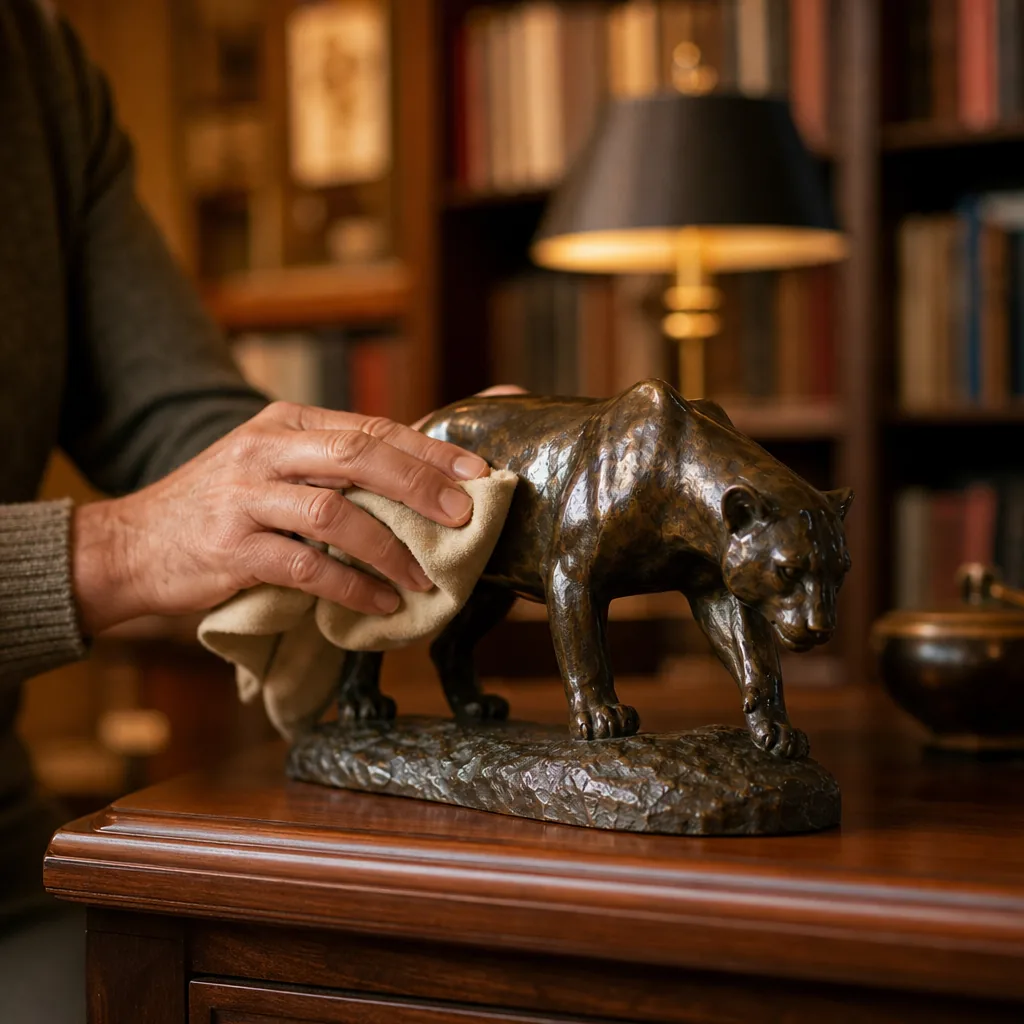
A properly cared-for bronze can last centuries — literally. Here is the practical care protocol:
Indoor Display
- Dusting: Use a soft, lint-free cloth (microfiber works well) or a soft-bristle brush. Do not use feather dusters, which can scratch patina.
- Cleaning: For fingerprints and light soiling, a cloth dampened with distilled water is sufficient. Avoid household cleaners, which can strip patina.
- Waxing: Apply a thin coat of Renaissance Wax or Paste Wax (Johnson's) every 6–12 months to protect the patina. Buff lightly with a soft cloth. This is the same protocol used by museum conservators.
- Humidity: Keep indoor humidity between 40–55%. Extreme dryness can cause patina cracking over long periods; extreme humidity encourages verdigris (green corrosion) on unprotected surfaces.
Outdoor Display
Lopez bronzes designated for outdoor use (check with your gallery — not all editions are suitable) require more aggressive care: - Wax every 3–4 months. - Avoid direct salt-air exposure without additional protective coating. - In freezing climates, bring outdoor bronzes inside for winter — thermal cycling degrades patina faster than any other environmental factor. - UV exposure is less of a concern for bronze than for other media, but it will slowly bleach painted accent colors on pieces that use supplemental paint in their finish.
Patina Integrity
The patina is the soul of a Lopez bronze. Do not attempt to "restore" a patina yourself — if a piece is damaged, contact a professional bronze conservator. A poorly executed home restoration can permanently damage the chemical surface and substantially reduce the sculpture's value.
Nano Lopez as a Collectible Investment: What the Numbers Suggest
A few documented data points for collectors weighing the investment dimension:
- Sold-out life-size editions have been documented trading on the secondary market at multiples of 2–4× their original primary gallery price.
- The Rhino Grande edition of 250 is among the smallest standard-edition runs in current Lopez production, making it structurally scarcer than the 350-edition pieces.
- Artist Proof numbers (AP designations) consistently command 10–25% premiums over same-edition standard numbers in secondary transactions.
- Public installations worldwide of Lopez bronzes number in the dozens, including resort properties, corporate campuses, and museum collections — public placement is a documented value driver for named sculptors.
- Cultural longevity factor: Lopez's career spans over four decades of consistent production and exhibition. Artists with this kind of sustained gallery relationship and documented auction history represent significantly lower investment risk than emerging sculptors.
We are not investment advisors, and art should be purchased first for the love of it. But the structural factors — limited editions, sold-out precedents, documented secondary market premiums, and a globally recognized catalog — are all present in Lopez's work.
Conclusion: Your Next Step as a Nano Lopez Collector
Nano Lopez has spent over four decades building a body of work that stands alone in contemporary sculpture: technically rigorous, visually joyful, and rooted in a Colombian cultural tradition that gives it genuine depth beneath the surface charm. Whether you are drawn to the frog-optimism of Kiko, the dragon-gravitas of Davian, the quiet dignity of Timothy, or the armored vulnerability of Rhino Grande, there is a Nanimal waiting to become part of your space and your story.
The best next step is simple: explore the full current collection, compare sizes, and find the piece that won't let you look away.
Browse all available Nano Lopez Sculptures at Dolphin Galleries →
Every piece in our inventory is authenticated, properly documented, and available with the full care guidance you need to protect your investment for generations.
